Operations & Delivery · 4 min read
Agile Beyond IT: Ways of Working for Non-Software Teams
Agile began in software, but its core ideas, short cycles, visible work, regular reflection and close contact with customers, work for almost any team. The trick is borrowing the principles without copying the jargon.
Agile ways of working started in software development, where teams found that delivering small pieces of working software frequently, and adjusting based on feedback, worked far better than long, fixed plans. Over time, the ideas spread. Marketing teams now run campaigns in short cycles, HR teams use visual boards to manage recruitment, and finance teams hold daily stand-ups during year-end.
Some of these adoptions work brilliantly. Others produce frustrated teams following rituals that make little sense for their work. This article looks at which agile ideas transfer well beyond software, how to adapt them, and what to avoid.
The ideas worth borrowing
Strip away the frameworks and terminology, and agile rests on a handful of ideas that apply to most knowledge work.
Work in short cycles
Instead of planning a large piece of work months in advance and delivering it all at the end, break it into smaller pieces and deliver something useful every few weeks. Short cycles create regular opportunities to check direction and adjust.
In practice: a marketing team might plan in two-week cycles, launching and testing smaller campaign elements rather than one big launch. An HR team designing a new onboarding process might pilot the first week's experience before building the rest.
Make work visible
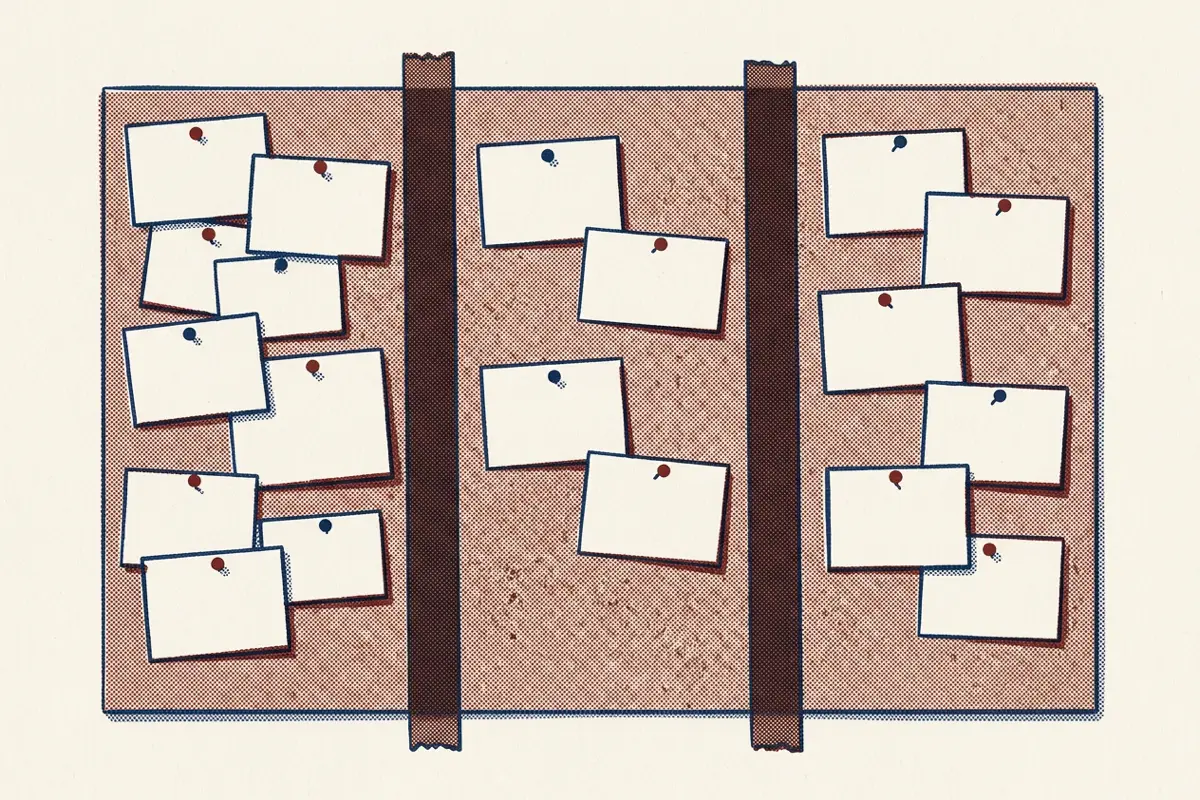
Put the team's work somewhere everyone can see it, often on a simple board with columns such as "to do", "in progress" and "done". Visible work helps teams spot bottlenecks, avoid duplication and see when they have taken on too much.
In practice: a finance team can track month-end tasks on a board, making it obvious where things are stuck and who needs help.
Limit work in progress
Teams that start too many things finish few of them. Limiting how much is in progress at once, and finishing before starting, speeds up delivery and reduces stress.
Stay close to customers
Agile emphasises frequent contact with the people the work is for, and adjusting based on their feedback. For internal teams, the "customer" may be colleagues: managers using an HR process, or teams relying on finance reports.
Reflect and improve regularly
Short, regular reviews, often called retrospectives, ask: what went well, what did not, and what will we change? This simple habit drives continuous improvement.
Empower the team
Agile teams decide how to do their work, within clear goals. Leaders set direction and remove obstacles rather than directing every task.
Adapting, not copying
Software frameworks come with roles, ceremonies and vocabulary designed for building software. Copying them wholesale into a payroll team or a legal department rarely works.
Some adaptations that help:
- Choose the cycle length to suit the work. Two weeks suits some teams; others work better with monthly cycles or a continuous flow of work.
- Use plain language. "Weekly planning" and "monthly review" may land better than unfamiliar terms.
- Not every team needs daily stand-ups. A short check-in two or three times a week may be enough.
- Respect fixed deadlines and compliance. Finance close, payroll and regulatory submissions have immovable dates. Agile practices can help manage the work towards them, but they do not remove them.
- Mix approaches. Many teams combine a visual board and regular retrospectives with traditional planning for large, predictable pieces of work.
Where agile works well, and where it does not
Agile ideas work best for work that is:
- Uncertain or new, where learning as you go is valuable.
- Divisible into smaller pieces that deliver value on their own.
- Improved by feedback from customers or users.
They add less value for work that is highly routine and predictable, where the process is already well understood, or where tasks cannot be broken into smaller useful pieces. Even there, visible work and regular reflection often still help.
Common pitfalls
- Rituals without purpose. Holding stand-ups and retrospectives because "that is what agile teams do", without the team understanding why.
- Agile in name only. Calling a team agile while managers still dictate tasks and timelines.
- Ignoring the wider organisation. A team can work in short cycles, but if budgets, approvals and governance run annually, it will hit constant friction.
- Over-tooling. Spending weeks configuring software before trying a simple board on a wall or a shared spreadsheet.
- Treating it as a one-off change. Ways of working evolve. Regular reflection should keep refining how the team works.
Introducing agile ways of working
Introducing new ways of working is itself a change, and people need to understand why and be involved in shaping it. Start small: pick one team with a real problem, such as too much work in progress or unclear priorities, try a few practices for a couple of months, and review honestly. Success in one team builds interest in others.
How mature are your ways of working?
Updated October 2026: we have added an Agile & Ways of Working assessment, designed for any team or organisation rather than just software. It covers customer value and outcomes, team practices and rhythm, empowerment and collaboration, flow and prioritisation, leadership and culture, and learning and adaptation.
Because new ways of working involve changing habits, the Change Management assessment is a useful companion if you are rolling them out across a larger organisation.
Frequently asked questions
Do non-software teams need a Scrum Master or agile coach?
Not necessarily. A coach can help in the early stages, but many teams succeed with a leader who understands the principles and a willingness to experiment and reflect.
Which agile framework is best for business teams?
Rather than adopting a framework wholesale, start with the underlying practices: visible work, limits on work in progress, short planning cycles and regular retrospectives. Add structure as needed.
How do we measure whether agile is working?
Look at outcomes: how quickly work is delivered, how often priorities are met, customer or stakeholder satisfaction, and team wellbeing. Avoid measuring how faithfully a team follows agile rituals.